So, from the age of three till six, being able to tackle his environment deliberately and consciously, he begins a period of real constructiveness.
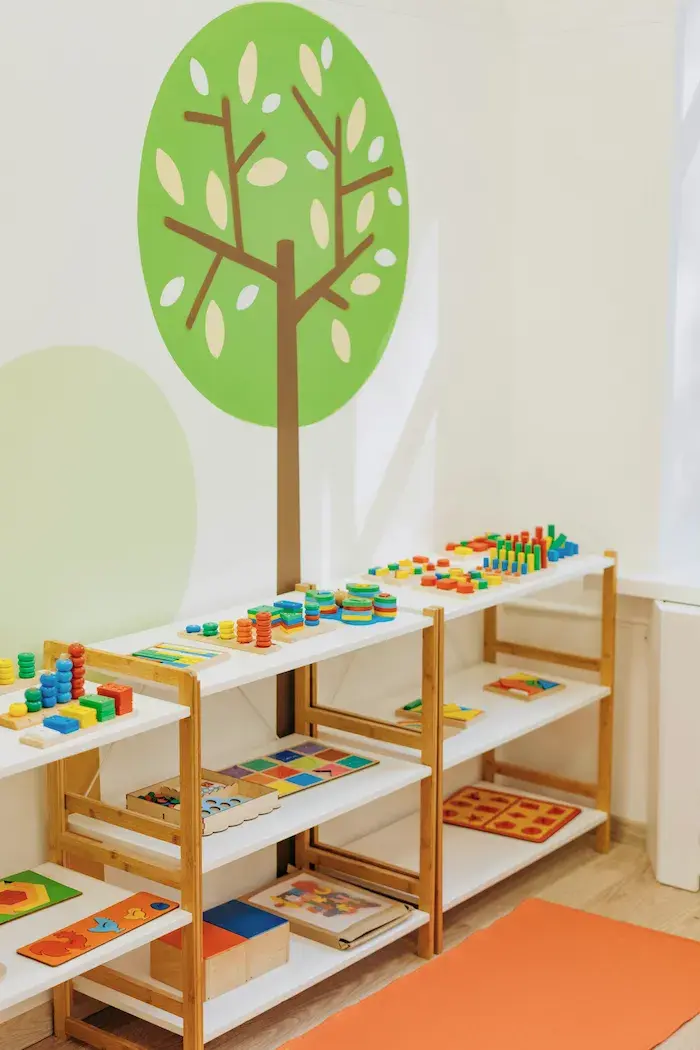
CMA's CASA program is designed for children aged 2.5 to 6 years, providing a rich, nurturing environment that supports growth across all areas of development. In our classrooms, children are encouraged to choose their activities, follow their interests at their own pace, and cultivate independence. This freedom, paired with purposeful guidance, strengthens concentration and fosters remarkable personal and academic growth.
Children in CASA are introduced to advanced Montessori materials that expand on practical life, sensorial, mathematics, language, and cultural understanding. Our experienced educators observe each child closely, responding to individual interests and creating personalized learning experiences. This approach allows children to thrive in a supportive and motivating environment, building confidence, curiosity, and self-direction.
Our Casa program emphasizes academic readiness, creative expression, and positive social interaction. Children work with enriched Montessori materials that support independence and prepare them for a confident, successful transition to elementary school.
Our licensed Casa preschool and kindergarten program in Saddle Ridge welcomes families from across NE Calgary — including Skyview Ranch, Cityscape, Redstone, Cornerstone and Savanna — and we accept the Alberta Child Care Subsidy and affordability grant.
A typical day centres on a long, uninterrupted work cycle, where children freely choose purposeful activities and return to them as often as they like, building deep focus. The day also includes group time, outdoor play, and a healthy snack. Families send their child with their own lunch, and — for everyone's safety — we are a strictly nut-free facility.
Practical Life
Practical life activities are inspired by everyday routines, from preparing food to caring for the environment. Children are naturally drawn to imitate meaningful work they see at home, making these exercises their first steps toward independence. In the Montessori classroom, these familiar tasks bridge home and school, fostering responsibility, coordination, and pride in accomplishment.
Sensorial Activities
Sensorial exercises help children refine their senses by exploring differences in size, shape, color, texture, weight, sound, smell, and taste. Through matching, sorting, and sequencing, children build vocabulary, strengthen motor skills, and lay the foundation for mathematical and geometric understanding.
Language
Language development is woven into daily activities. Practical life and sensorial work strengthen the hands and coordination, preparing children for writing. Sandpaper letters introduce the sounds and shapes of the alphabet, and as children gain confidence in forming letters, they begin to read and write independently, decoding the words around them naturally and joyfully.
Mathematics
CASA children explore numbers, quantities, and counting into the thousands. Using hands-on materials, they develop a concrete understanding of addition, subtraction, multiplication, and division. These tangible experiences make abstract concepts meaningful and intuitive.
Culture
Our Culture curriculum builds on earlier learning and introduces children to music, art, world traditions, geography, history, and science. Children explore continents, land and water forms, flags, and the parts of plants and animals. This work fosters an understanding of the interconnectedness of all life and encourages responsibility, respect, and care for the world around them.
Movement
Gymnastics, as they are taught today, are only necessary for children who are in closed environments and not for the children who are set free.
Movement is essential to the development of the CASA child. Montessori observed that children learn through purposeful action, not just structured exercise. In our classrooms, children develop coordination and control through carrying materials, performing precise hand movements, walking the line, and moving freely and intentionally within their environment. Movement supports both physical and cognitive growth while promoting independence and self-confidence.
Discover the Casa Experience
Schedule a visit to see our Casa Program in action and experience the magic of Montessori education firsthand.
Ready to begin? Learn how to enroll in our NE Calgary Montessori program.